Edible Castor Oil (Arandi Tel), Food Grade & Hexane Free
Rs.295 8.99
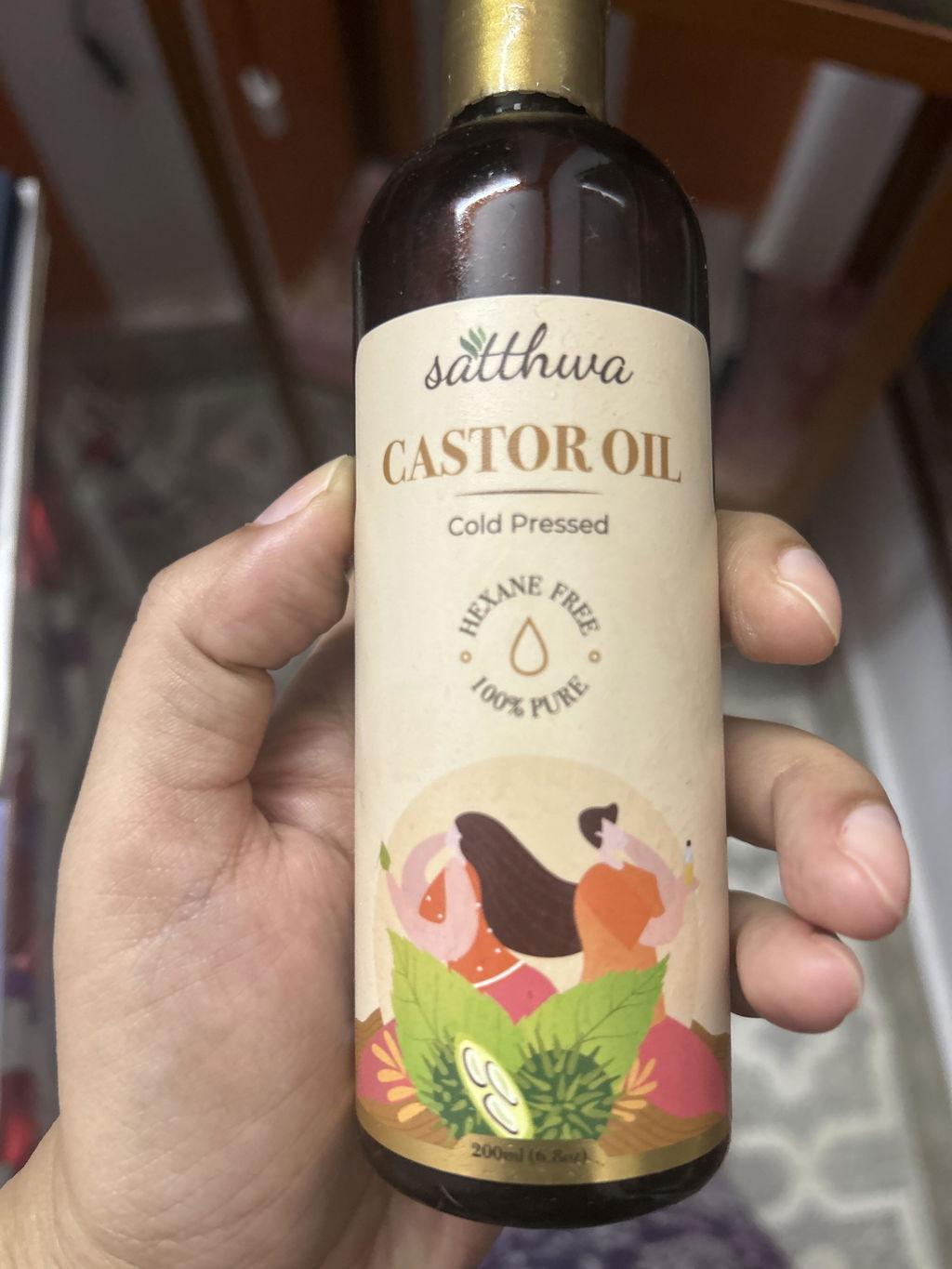
Food-grade castor oil (arandi ka tel), cold-pressed, hexane-free and made under an FSSAI licence for edible use. Lab-tested at 85% ricinoleic acid. Thick and rich, it is also used as an overnight hair oil and to condition brows, lashes, lips and dry skin.
• Edible grade, FSSAI licensed, in a food-grade PET bottle
• Cold-pressed, hexane-free and unrefined
• 85% Ricinoleic acid, lab-tested
• Also for hair, brows, lashes and skin
Quantity - 200ml | For Topical & Edible Use


Is castor oil edible? Food-grade and FSSAI-licensed
Only if it is made for eating. Satthwa Castor Oil, known as arandi ka tel in Hindi, is cold-pressed from the seeds of the castor plant (Ricinus communis). It is produced under FSSAI licence 12222999000418 and packed in a food-grade PET bottle. Much of the castor oil sold in India is solvent-extracted or refined for industrial use and is not meant to be eaten. Before you take any castor oil by mouth, check the label for an FSSAI licence number and the words “edible” or “food grade”.
Cold pressed and hexane free: why it matters
Most commercial castor oil is extracted with hexane, a petroleum solvent, because it gets more oil out of the seed. Cold pressing uses only mechanical pressure. Our lab report shows no hexane or solvent residue and no heavy metals. Its low acid and peroxide values mean the oil is fresh and not oxidised. The full results are in the Lab Report tab. You can also learn how to test castor oil purity at home.
Can you drink castor oil?
Edible castor oil has a long traditional use as a laxative, and it acts quickly. It is for occasional, short-term use only, not as a daily habit. We don’t print an internal dose on the label because the right amount depends on the person. Ask your doctor or pharmacist before taking it by mouth. Do not take it if you are pregnant, as it can trigger contractions, and do not give it to children without a doctor’s advice. Read more: Is castor oil safe to drink?
Castor oil for hair
Castor oil is one of the most traditional Indian hair oils. Because it is so thick, it works well as an overnight oil: it coats the hair shaft, reduces dryness and frizz, and smooths rough ends. Most of the oil is ricinoleic acid, an unusual fatty acid that gives castor oil its thick texture. Research on castor oil and hair growth is limited, so treat it as a conditioning scalp and hair oil, not a growth treatment. Many people mix it 1:1 with a lighter oil such as coconut or black seed oil to make it easier to spread.
Castor oil for skin, lips, brows and nails
A few drops of castor oil soften dry patches, cracked heels, chapped lips and dry cuticles. It is also a popular overnight conditioner for brows and lashes. Castor oil is heavy, so on the face, use a small amount mixed with a lighter oil, and patch test first. Avoid it if your skin is acne-prone.
Composition and purity
Satthwa Castor Oil is cold-pressed and hexane-free, with no solvent residue from extraction. It is around 85% ricinoleic acid, with smaller amounts of oleic acid (omega-9), linoleic acid (omega-6) and natural vitamin E. It contains no parabens, mineral oil, added fragrance or colour, and it is lab-tested for purity and composition.
| Component | Why it matters |
|---|---|
| Ricinoleic acid, 85% (lab tested) | Gives castor oil its thick texture; coats and conditions hair and skin |
| Oleic acid (omega-9) | Softens and moisturises |
| Linoleic acid (omega-6) | Supports the skin’s barrier |
| Natural vitamin E | Helps protect the oil from oxidation |
| Test Parameter | Lab Result |
|---|---|
| Extraction Method | Cold-Pressed |
| Hexane / Solvent Residue | Not Detected |
| Heavy Metals (Lead, Mercury, Arsenic, Cadmium) | Not Detected |
| Acid Value (Freshness Indicator) | Low |
| Peroxide Value (Oxidation Indicator) | Very Low |
| Bacterial Count | Very Low |
| E. coli | Not Detected |
| Yeast & Mould | Not Detected |
| Salmonella | Absent |
| Trans Fats | Not Detected |
| Adulteration Check | Genuine Castor Oil |
Learn more about castor oil
Customer Reviews
Just amazing. The castor oil from this brand is too good.
I use it everyday and love it, super quality 👌
Better than the other available brands in the market
Good quality and can it be taken orally
Delivered on time...Good product.
I placed an order, do I need to confirm it?
If you have placed a prepaid order, you do not need to confirm it. Your order will be processed automatically. If your order is cash on delivery (cod) order, then you would need to reply to the order email so that we can confirm the order and process it without delay.
Any advantages of pre-paying for my order?
Yes, absolutely. Not only do you get a Rs.50 discount on the total but also all prepaid orders are shipped on a priority basis, which means that you get your order delivered faster at a discount. We accept all debit/credit cards, net banking & UPI for online payment.
Are there any shipping charges?
Presently shipping is completely free for orders over Rs.450. We charge Rs.50 for orders below Rs.450
When will my order be delivered?
We dispatch orders within 12 hours, it usually takes 3-5 working days for your order to be delivered.
How can I track my order?
You will get confirmation and tracking details once your order has been shipped, please make sure your phone number is entered correctly while you placing your order.
Can I exchange/return my product?
We believe in giving a great customer experience every time you shop with us, if wrong or damaged product is delivered to you, we will be happy to provide you an exchange.
Is Satthwa castor oil edible?
Yes. It is edible-grade, made under FSSAI licence 12222999000418, cold-pressed and hexane-free, and packed in a food-grade bottle. Industrial castor oil is not made for eating, so check for “edible” or “food grade” on any castor oil you plan to take by mouth.
What is the difference between edible and industrial castor oil?
Edible castor oil is pressed and packed to food-grade standards and licensed for eating. Industrial castor oil is often extracted with solvents such as hexane, may be refined with chemicals, and is made for uses like lubricants, soaps and paints, not for eating. Check the label for an FSSAI licence and the words “edible” or “food grade”. Ours is cold-pressed and hexane-free.
How much castor oil can I take?
We don’t give an internal dose on the label, because the right amount varies from person to person. Castor oil is a strong laxative, so speak to your doctor or pharmacist before taking it by mouth, and use it only occasionally.
Can castor oil help with constipation?
Castor oil has a long traditional use as a laxative and works quickly. Use it only occasionally and for a short time, not daily. Do not take it if you are pregnant, and do not give it to children without a doctor’s advice. If constipation lasts more than a few days or comes with pain, see a doctor.
How should I use castor oil for hair?
Warm one or two teaspoons between your palms, massage into the scalp for 3 to 4 minutes and work the rest through the lengths. Leave it on overnight, or for at least 1 to 2 hours, then wash with a mild shampoo such as Daily Drench; you may need two washes. Use it once or twice a week. If it feels too thick, mix it 1:1 with coconut or black seed oil.
How long should I leave castor oil on my hair?
Leave it on for 1 to 2 hours, or overnight for deeper conditioning. Cover your hair with a shower cap so the oil doesn’t transfer to your pillow.
Can castor oil help with eyebrows and eyelashes?
It is a popular overnight conditioner for both. It coats the hairs and keeps them soft, which can make them look fuller, but there is little research on it growing new hair. Apply a tiny amount at night with a clean mascara wand or cotton bud. Keep it out of your eyes, and stop if your eyelids become irritated.
Can I apply castor oil on my face?
Yes, in small amounts. Castor oil is thick and can feel heavy, so mix a drop or two with a lighter oil or your moisturiser and use it on dry areas. Patch test first, and avoid it if your skin is acne-prone.
Can castor oil be used for dandruff?
It can ease a dry, flaky scalp by moisturising it. But most dandruff comes from an overgrowth of yeast on the scalp, and heavy oils can make that type worse. If your flakes are oily or yellowish, use an anti-dandruff shampoo instead, and see a dermatologist if it persists. Not sure which type you have? Take the dandruff quiz.
Can I use castor oil and black seed oil together?
Yes. Mixing them makes castor oil easier to spread, and you get black seed oil’s thymoquinone alongside castor oil’s conditioning thickness. Mix equal parts and massage into the scalp before washing, or alternate the two. More on black seed oil vs castor oil for hair.
How to Use:
- Hair: massage 1 to 2 teaspoons into the scalp and lengths, leave for 1 to 2 hours or overnight, then wash with a mild shampoo. Use once or twice a week.
- Brows and lashes: apply a tiny amount at night with a clean mascara wand or cotton bud. Keep it out of your eyes.
- Lips, cuticles and cracked heels: rub in a drop or two at night.
- Dry skin: mix a few drops into your body lotion or a lighter oil after a shower.


Frequently Bought


Satthwa Has Been Featured In